
The cheapest quote is not necessarily the least expensive website to own. Compare the deliverables, running costs and handover arrangements before choosing a supplier.
Start with the business task
Write down the main action the website should support: an enquiry, a booking, a purchase or a request for information. A five-page company site and a booking system can look similar while requiring different work. Gather the content you expect to publish and name the person responsible for writing and approving it. This gives suppliers a useful brief instead of an open-ended request for a professional website.
Separate build costs from running costs
Ask for design and implementation, domain registration, hosting, licences and support to be itemised. Record renewal dates and account ownership. Two totals can appear comparable while only one includes content entry, training or a defined handover. A simple first-year and ongoing-cost worksheet is more useful than a headline price with several unspecified add-ons.
Compare the same scope
Send every supplier the same page list, languages, forms, payment requirements and integrations. Ask how many review rounds are included, what counts as acceptance and how additional requests are estimated. SEO included is too vague on its own: clarify whether it means page titles, content production or recurring work. Compare the actual commitment rather than the appearance of the pricing table.
Choose a useful first release
Launch the essential service pages, a comfortable mobile experience and a working contact route first. A complex dashboard or a separate app can follow when there is a clear need. Do not postpone information customers need to make a decision. Keep a separate backlog and revisit it using customer feedback, rather than treating every possible feature as a launch requirement.
Agree ownership and handover
Clarify who owns the domain, hosting account, content and administrative access, and what happens if the relationship ends. Connect payments to reviewable milestones such as a page plan, approved layouts and a working staging site. Define a handover checklist that includes access, documentation and the important customer journeys. A verbal statement that the site is finished is not a substitute for agreed acceptance.
Turn the estimate into a decision
MobinQ publishes international planning estimates in USD. They are package examples rather than a final quote for every project; content, integrations and support change the scope. Share your existing URL, business goal, page list and languages before discussing an estimate. Explore a live portfolio example as well, so the conversation covers the experience you need rather than a technology name alone.
Before you commit
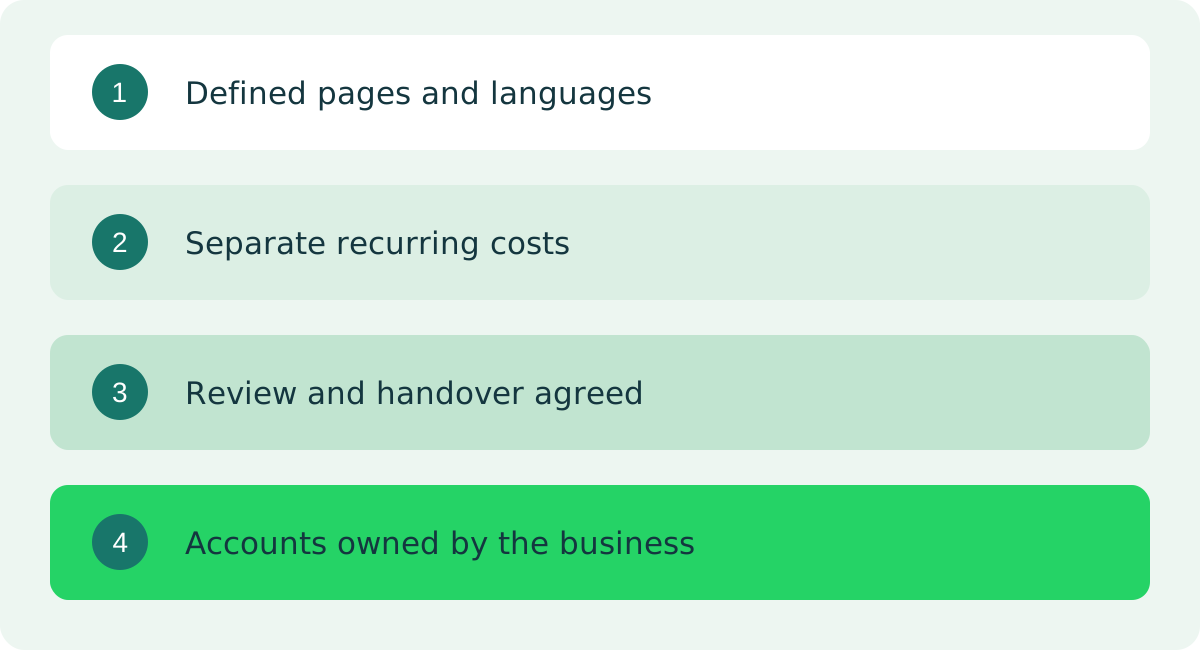
- Defined pages and languages
- Separate recurring costs
- Review and handover agreed
- Accounts owned by the business
Further reading
Free consultation on WhatsApp
Share your website, goal and preferred timeline to discuss the next practical step. The initial consultation is free; scope and fees are agreed before implementation.
Free consultation on WhatsApp